
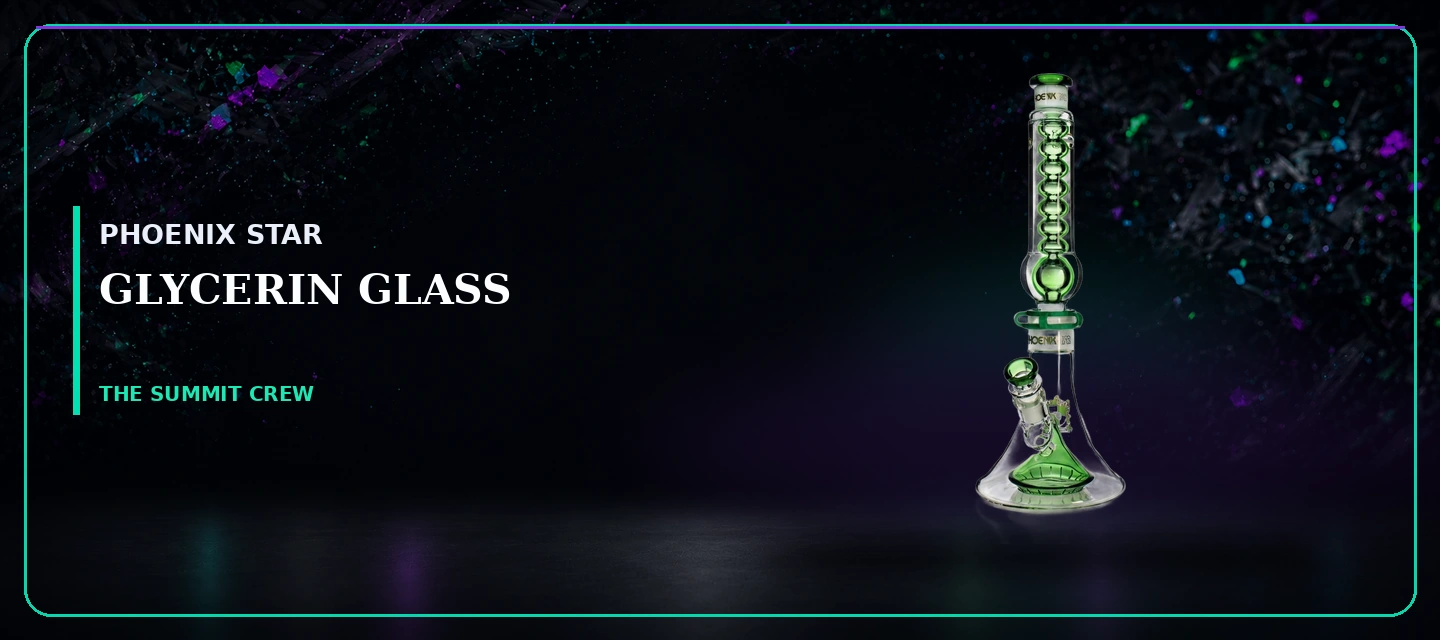
To answer what is a glycerin bong: it is a borosilicate glass water pipe featuring an enclosed chamber filled with sealed glycerin-based cooling liquid that you place in the freezer before use. As smoke passes through internal glass coils surrounded by the frozen liquid, it cools rapidly without introducing excess melting water or restricting airflow.
Standard glassware relies purely on water diffusion or loose ice cubes dropped into the neck. Ice melts, overfills the reservoir, and quickly loses its chilling effect. Freezable glassware solves that problem by keeping the coolant completely sealed inside a separate compartment. For adult smokers using lawful herbal blends or tobacco, this hardware provides a smoother draw and reliable temperature reduction across multiple sessions.
Key takeaways
- Glycerin stays semi-solid at domestic freezer temperatures, removing the risk of burst glass caused by ice expansion.
- An internal spiral or condenser coil forces smoke to travel a longer path across chilled glass walls before inhalation.
- Borosilicate glass resists sharp temperature shifts, but basic precautions are required to avoid thermal shock.
- Removable glycerin chambers prevent accidental drops, save freezer shelf space, and simplify daily maintenance.
| Feature | Glycerin water pipe | Traditional ice-pinch pipe | Standard dry beaker pipe |
|---|---|---|---|
| Cooling method | Sealed glycerin thermal coil | Melting ice cubes in neck | Room-temperature water percolation |
| Water level stability | Constant; coolant stays sealed | Rises continuously as ice melts | Constant |
| Prep time required | 60 to 90 minutes in freezer | Immediate (if ice is ready) | None |
| Condensation path | Extended spiral or glycerine jacket | Direct vertical draw over ice | Direct vertical draw |
| Durability consideration | Thermal shock awareness needed | Low thermal risk | Standard impact risk |
Cooling method
Glycerin water pipe: Sealed glycerin thermal coil
Traditional ice-pinch pipe: Melting ice cubes in neck
Standard dry beaker pipe: Room-temperature water percolation
Water level stability
Glycerin water pipe: Constant; coolant stays sealed
Traditional ice-pinch pipe: Rises continuously as ice melts
Standard dry beaker pipe: Constant
Prep time required
Glycerin water pipe: 60 to 90 minutes in freezer
Traditional ice-pinch pipe: Immediate (if ice is ready)
Standard dry beaker pipe: None
Condensation path
Glycerin water pipe: Extended spiral or glycerine jacket
Traditional ice-pinch pipe: Direct vertical draw over ice
Standard dry beaker pipe: Direct vertical draw
Durability consideration
Glycerin water pipe: Thermal shock awareness needed
Traditional ice-pinch pipe: Low thermal risk
Standard dry beaker pipe: Standard impact risk
The mechanics behind what is a glycerin bong
To understand what is a glycerin bong, look at how regular liquids behave when frozen. When water freezes, it crystallises into a rigid solid. According to Seametrics, liquid water expands by 9% in volume when it freezes into ice. If you fill a sealed glass tube with pure water and place it in a domestic freezer, that outward expansion will crack the glass.
Glycerin behaves entirely differently. Vegetable glycerin is a dense, food-safe compound with a thick consistency. When mixed with purified water, its freezing threshold drops dramatically. Data from The Engineering ToolBox shows that a solution of 66.7% glycerine to water by mass depresses the freezing point of the mixture down to -46.1°C (-51°F).
Because the U.S. Food and Drug Administration recommends keeping home freezers at or below 0°F (-18°C) for safe temperature control, the exact cooling behaviour depends on the manufacturer's formulation. Instead, the liquid turns into a firm, gel-like slush that does not expand aggressively against the inner chamber walls.
Thermal retention is the other major benefit. As noted by Smoke Cartel, glycerin liquid has a specific heat capacity of approximately 2.43 kJ/kg·K, enabling high thermal absorption as smoke passes through a cooling coil. Heat transfers out of the smoke and into the surrounding cold gel, dropping the temperature of your draw in seconds.
How freezable glass hardware operates
Freezable glassware separates the cooling medium from the smoke path entirely. You do not inhale glycerin vapour, nor does the liquid touch your water. The design relies on two concentric glass sections: an outer sealed sleeve holding the fluid, and an internal glass tube carrying the draw.
Spiral coil condensers
Most freezable pipes route the smoke through an elongated glass spiral inside the glycerin vessel. Rather than rising straight through a hollow cylinder, the smoke must wind through several tight loops. This extended path forces the smoke into sustained contact with the chilled glass boundaries, giving the dense glycerin ample time to absorb heat before the draw reaches the mouthpiece.
Removable neck sections
Modern glass water pipes often split into two distinct sections connected by ground glass joints and secured with a plastic joint clip. The base holds the downstem and main water reservoir for filtration. The removable upper neck holds the glycerin. This modular layout means you do not have to crowd an entire pipe onto a freezer shelf next to frozen food; you detach only the top cylinder. To see how these components compare to standard hardware, read our guide on types of bongs and waterpipes explained.
Inline glycerin chambers
Certain compact bubblers and handheld dry pipes integrate fixed glycerin chambers directly into the stem. While convenient and portable, fixed designs require freezing the entire piece. You must remove every drop of water before chilling to prevent water-ice expansion from cracking the lower percolators.
Step-by-step chilling and usage guide
Freezable glassware requires specific handling to preserve the seal and ensure clean performance. Here's how the Summit Crew keeps theirs fresh:
- Clean and dry the piece thoroughly. Any residual rinse water sitting inside the smoke path can freeze into an ice barrier that blocks your draw.
- Detach the glycerin section. Remove the joint clip and separate the upper freeze chamber from the base. Leave the base, downstem, and bowl on your counter.
- Rest the chamber flat. Lay the glycerin unit horizontally on a flat freezer shelf or rest it securely upright. Avoid placing heavy items against it.
- Chill for 60 to 90 minutes. This allows the mixture to reach the target temperature without putting prolonged physical pressure on the glass.
- Reassemble with care. Take the chilled neck from the freezer, wipe off exterior condensation, connect it to your base, and fasten the joint clip securely.
- Add room-temperature water to the base. Never fill the base with warm or boiling water when attaching a frozen neck.
For lawful adult use only. Joint Venture does not sell any controlled substance. These glass water pipes are designed exclusively for legal herbal mixtures and loose-leaf tobacco.
Preventing thermal shock and structural damage
While quality freezable hardware uses lab-grade glass, improper temperature transitions remain the primary cause of hardware failure. As documented on Wikipedia, borosilicate glass can withstand temperature differentials of up to 166°C without fracturing due to its low coefficient of thermal expansion.
Even with that structural resilience, you must manage severe temperature spikes. Putting a butane torch flame near a sub-zero glass joint or running hot tap water over a frozen coil creates uneven expansion across the inner and outer glass walls. That stress snaps joints at their weld lines.
Follow these clear rules to preserve your hardware:
- Allow the chilled glass to return to ambient room temperature before cleaning it.
- Never pour boiling water into any borosilicate pipe, whether chilled or warm.
- Keep the chamber away from metal freezer walls or loose ice trays that could knock against it when the door shuts.
- Do not store the glass inside the freezer indefinitely; chill it before use and store it at room temperature afterward.
Cleaning and maintaining freezable glass
Ash, resin, and plant debris cling quickly to cold internal surfaces. When hot smoke meets cold glass, airborne plant oils condense instantly along the spiral walls. Frequent cleaning keeps the inner airflow open. You can explore our broad catalogue of accessories at our complete product collection.
When clearing out residue, never use metal scraping tools inside the glass neck, as scratches create structural weak points. Instead, follow our step-by-step instructions on cleaning glass water pipes. Let the unit warm up to room temperature first. Then plug the openings, add isopropyl alcohol with coarse salt, and gently swirl until the inner spiral clears. Rinse thoroughly with lukewarm tap water and let the piece dry completely before putting it back in the freezer.
Frequently asked questions
Can I leave my glycerin water pipe in the freezer permanently?
Leaving glass in the freezer for days or weeks increases the chance of accidental knocks from items being moved around your shelves. Borosilicate handles cold temperatures well, but repeated freezing cycles combined with accidental shelf impacts can cause stress fractures over time. Storing the piece at room temperature and placing it in the freezer 60 to 90 minutes before your session is the safest routine.
Is the glycerin inside the glass toxic?
The liquid sealed inside the glass is non-toxic vegetable glycerin mixed with purified water and occasionally food-grade colouring. It is completely enclosed within an airtight borosilicate chamber and never makes contact with the smoke path or water reservoir during normal operation. If an accidental drop or impact cracks the outer wall and fluid leaks out, stop using the pipe immediately.
Why is glycerin better than putting ice cubes in the neck?
Ice cubes melt as hot smoke passes over them, trickling water down into the base and raising the water level. This surplus water can flood your downstem, ruin the pull resistance, or splash into the mouthpiece. A sealed glycerin coil delivers colder surface contact without altering your water level or requiring constant trips to empty the base.
What should I do if the draw feels blocked after freezing?
A blocked draw usually happens when moisture from a previous cleaning session was left inside the smoke spiral before freezing. The trapped water freezes into an ice plug inside the narrow glass airway. Let the unit sit at room temperature for 15 minutes so the internal ice melts, blow through the tube to clear the moisture, dry it out, and re-chill it.
Can I clean a cold glycerin chamber with hot water?
Never run hot water through a cold glycerin chamber. Subjecting frozen borosilicate glass to hot tap water creates instant thermal shock, which can crack the delicate spiral welds inside the chamber. Always wait until the entire glass piece reaches room temperature before beginning any cleaning or rinsing routine.
Maintaining your hardware for the long term
A glycerin glass water pipe provides reliable cooling performance without the mess of melting ice, provided you respect basic thermal limits and handle the piece properly. By keeping the piece clean, avoiding direct flame exposure near the cooling coil, and chilling only the detached upper chamber, you protect your glassware from unnecessary stress and ensure a smooth draw every time.